Sunday, May 31, 2015

Astronomy Picture of the Day: MAy 31st of 2015

Supernova 1994D and the Unexpected Universe
Image Credit: High-Z Supernova Search Team, HST, NASA
Explanation: Long ago, far away, a star exploded. Supernova 1994D, visible as the bright spot on the lower left, occurred in the outskirts of disk galaxy NGC 4526. Supernova 1994D was not of interest for how different it was, but rather for how similar it was to other supernovae. In fact, the light emitted during the weeks after its explosion caused it to be given the familiar designation of a Type Ia supernova. If all Type 1a supernovae have the same intrinsic brightness, then the dimmer a supernova appears, the farther away it must be. By calibrating a precise brightness-distance relation, astronomers are able to estimate not only the expansion rate of the universe (parameterized by the Hubble Constant), but also the geometry of the universe we live in (parameterized by Omega and Lambda). The large number and great distances to supernovae measured over the past few years, when combined with other observations, are interpreted as indicating that we live in a previously unexpected universe.
National Geographic Photo of the Day: May 31st of 2015

May 31, 2015
The Power of Few
Photograph by Stefane Berube, National Geographic Your Shot
“The night before this photo, we tried all day to get a good photo of the endangered white rhino,” writes Your Shot member Stefane Berube, who captured this shot at the Ziwa Rhino Sanctuary in Uganda. “Skulking through the grass carefully, trying to stay 30 feet away to be safe, didn't provide me the photo I was hoping for. In the morning, however, I woke up to all three rhinos grazing in front of me.” Berube used a 50mm lens rather than a wide-angle lens or telephoto “because of its sharpness and similarity to how our eyes perceive depth in real life.”
Astronomy Picture of the Day: May 30rh of 2015

Messier Craters in Stereo
Image Credit: Apollo 11, NASA; Stereo Image by Patrick Vantuyne
Explanation: Many bright nebulae and star clusters in planet Earth's sky are associated with the name of astronomer Charles Messier, from his famous 18th century catalog. His name is also given to these two large and remarkable craters on the Moon. Standouts in the dark, smooth lunar Sea of Fertility or Mare Fecunditatis, Messier (left) and Messier A have dimensions of 15 by 8 and 16 by 11 kilometers respectively. Their elongated shapes are explained by an extremely shallow-angle trajectory followed by the impactor, moving left to right, that gouged out the craters. The shallow impact also resulted in two bright rays of material extending along the surface to the right, beyond the picture. Intended to be viewed with red/blue glasses (red for the left eye), this striking stereo picture of the crater pair was recently created from high resolution scans of two images (AS11-42-6304, AS11-42-6305) taken during the Apollo 11 mission to the moon.
National Geographic Photo of the Day: May 30th 2015

May 30, 2015
Model Behavior
Photograph by Justin Anantawan, National Geographic Your Shot
“I was in Kingston, Jamaica, volunteering at an HIV ward at Missionaries of the Poor and trying to learn how to do fashion photography,” writes Your Shot member Justin Anantawan. Working with amateur models, Anantawan spent the day near an abandoned fort at a beach in Port Royal, capturing this shot at sunset. “The shoot was very simple—I just bought some striped fabric and chiffon from a store in downtown Kingston, wrapped it around the men, and then let the scenery and ocean breeze do the rest of the work. The man on the right held up the chiffon, and I took around ten shots before I captured the fabric at the just the perfect moment.”
Astronomy Picture of the Day: May 29th of 2015

Saturn at Opposition
Image Credit & Copyright: Christopher Go
Explanation: Telescopic observers on Earth have been treated to spectacular views of Saturn lately as the ringed planet reached its 2015 opposition on May 23 at 0200 UT. Of course opposition means opposite the Sun in Earth's sky. So near opposition Saturn is up all night, at its closest and brightest for the year. These sharp images taken within hours of the Sun-Earth-Saturn alignment also show the strong brightening of Saturn's rings known as the opposition surge or the Seeliger Effect. Directly illuminated, the ring's icy particles cast no shadows and strongly backscatter sunlight toward planet Earth, creating the dramatic surge in brightness. Saturn currently stands in the sky not far from bright Antares, alpha star of the constellation Scorpius.
National Geographic Photo of the Day: May 29th of 2015

May 29, 2015
Bird Feeders
Photograph by Abderazak Tissoukai, National Geographic Your Shot
Your Shot member Abderazak Tissoukai was near Xingping in China’s Guanxi region when he captured this picture of a cormorant fisherman at sunset. “Xingping is definitely one the most beautiful places in China, with its scenic karst landscapes [and] traditional and genuine people,” he writes. Curious to learn more about the local practice of cormorant fishing—in which trained birds with snared throats capture fish they’re unable to swallow—Tissoukai took a high-speed train from Zhuhai to Xingping to shoot fishermen on the Li River. “I wanted a complete, iconic definition of cormorant fishing,” he writes.
Thursday, May 28, 2015
AStronomy Picture of the Day: May 28th of 2015

Nearby Spiral Galaxy NGC 4945
Image Credit & Copyright: Petri Kehusmaa, Harlingten Atacama Observatory
Explanation: Large spiral galaxy NGC 4945 is seen edge-on near the center of this cosmic galaxy portrait. In fact, NGC 4945 is almost the size of our own Milky Way Galaxy. Its own dusty disk, young blue star clusters, and pink star forming regions standout in the sharp, colorful telescopic image. About 13 million light-years distant toward the expansive southern constellation Centaurus, NGC 4945 is only about six times farther away than Andromeda, the nearest large spiral galaxy to the Milky Way. Though the galaxy's central region is largely hidden from view for optical telescopes, X-ray and infrared observations indicate significant high energy emission and star formation in the core of NGC 4945. Its obscured but active nucleus qualifies the gorgeous island universe as a Seyfert galaxy and home to a central supermassive black hole.
National Geographic Photo of the Day: May 28th of 2015

May 28, 2015
Light in the Dark
Photograph by Mel Kevin Jumangit, National Geographic Your Shot
Dancers pause during the Sinulog Festival in Cebu City, the capital of the Philippine province of Cebu. The large festival of cultural and religious pageantry honors the Santo Niño, or child Jesus, whose statue is held aloft here by a colorfully costumed “queen.”
Tuesday, May 26, 2015
Astronomy Picture of the Day: May 27th of 2015
Approaching Pluto
Video Credit: NASA, Johns Hopkins U. Applied Physics Lab., Southwest Research Inst.
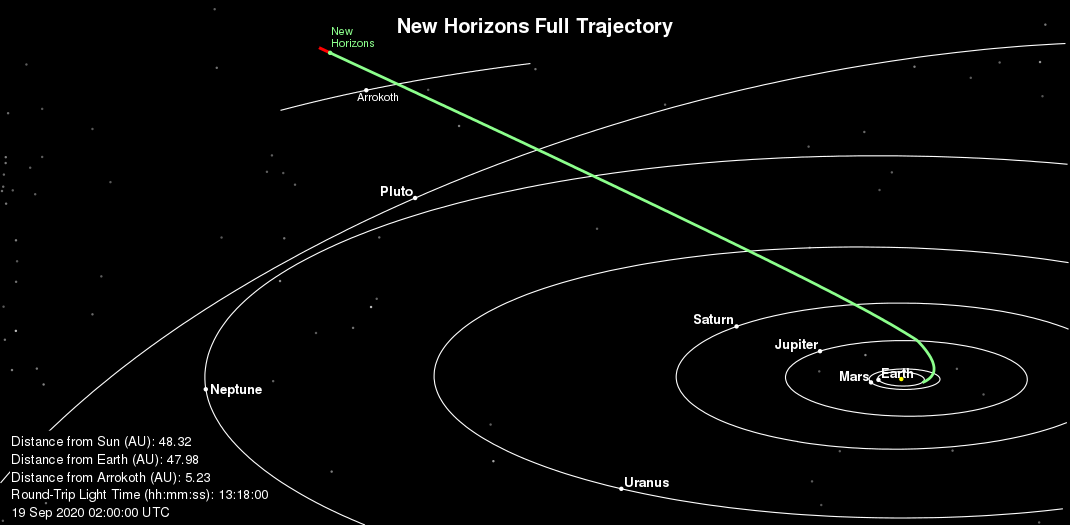
Explanation: Here comes Pluto. NASA's robotic New Horizons spacecraft is now beyond the orbit of Neptune and closing fast on the Solar System's most famous unexplored world. The featured time lapse video shows Pluto and Pluto's largest moon, Charon, orbiting their common center of mass in 13 frames taken from April 12 to April 18. Although blurry, images in the video now rival even the best images of Pluto yet taken from Earth. New Horizons remains on schedule to zoom past the distant dwarf planet on July 14.

National Geographic Photo of the Day: May 27th of 2015

May 27, 2015
Cow-Eyed
Photograph by Jawed Alam, National Geographic Your Shot
Your Shot member Jawed Alam was passing through a village near the Purulia district of West Bengal, India, when he saw a boy and his calf standing in a field of wildflowers. Alam saw the perfect frame in the background of colorful flowers, the boy’s yellow T-shirt, and the black calf. “I quickly adjusted my camera setting and started clicking pictures,” he writes.
Astronomy Picture of the Day: May 26th of 2015

Starburst Galaxy M94
Image Credit & Copyright: Leonardo Orazi
Explanation: What could cause the center of M94 to be so bright? Spiral galaxy M94 has a ring of newly formed stars surrounding its nucleus, giving it not only an unusual appearance but also a strong interior glow. A leading progenitor hypothesis holds that an elongated knot of stars known as a bar rotates in M94 and has generated a burst of star formation in the inner ring. Recent observations have revealed the outer, fainter ring is not closed and relatively complex. M94, pictured here spans about 30,000 light years, lies about 15 million light years away, and can be seen with a small telescope toward the constellation of the Hunting Dogs (Canes Venatici).


National Geographic Photo of the Day: May 26th of 2015

May 26, 2015
Staring at the Sun
Photograph by Clemens Capek, National Geographic Your Shot
A meerkat family warms up at sunrise in Oudtshoorn, South Africa. “Shortly after waking up, a meerkat family—also called a gang or mob—will warm in the sun to harvest energy for the day,” writes Your Shot member Clemens Capek. The animals are normally shy, but one family in the area became accustomed to humans in close proximity, allowing Capek to capture them in their natural surroundings.
Monday, May 25, 2015
Astronomy Picture of the Day: MAy 25th of 2015

The Galaxy Tree
Image Credit & Copyright: César Vega Toledano ; Rollover Annotation: Judy Schmidt
Explanation: First came the trees. In the town of Salamanca, Spain, the photographer noticed how distinctive a grove of oak trees looked after being pruned. Next came the galaxy. The photographer stayed up until 2 am, waiting until the Milky Way Galaxy rose above the level of a majestic looking oak. From this carefully chosen perspective, dust lanes in the galaxy appear to be natural continuations to branches of the tree. Last came the light. A flashlight was used on the far side of the tree to project a silhouette. By coincidence, other trees also appeared as similar silhouettes across the relatively bright horizon. The featured image was captured as a single 30-second frame earlier this month and processed to digitally enhance the Milky Way.

National Geographic Photo of the Day: May 25th of 2015

May 25, 2015
Pure Life
Photograph by Shibasish Saha, National Geographic Your Shot
Laborers work among the dust and debris at a brick field in Kolkata, India. “Men and women work together every day to earn some money for their family,” writes Shibasish Saha, a member of our Your Shot community.
Astronomy Picture of the Day: May 24th of 2015

Space Shuttle Rising
Image Credit: NASA
Explanation: What's that rising from the clouds? The space shuttle. Sometimes, if you looked out the window of an airplane at just the right place and time, you could have seen something very unusual -- a space shuttle launching to orbit. Images of the rising shuttle and its plume became widely circulated over the web shortly after Endeavour's final launch in 2011 May. The above image was taken from a shuttle training aircraft by NASA and is not copyrighted. Taken well above the clouds, the image can be matched with similar images of the same shuttle plume taken below the clouds. Hot glowing gasses expelled by the engines are visible near the rising shuttle, as well as a long smoke plume. A shadow of the plume appears on the cloud deck, indicating the direction of the Sun. The US Space Shuttle program concluded in 2011, and Endeavour can now be visited at the California Science Center.
National Geographic Photo of the Day: May 24th of 2015

May 24, 2015
Cracking the Surface
Photograph by Alexey Trofimov, National Geographic Your Shot
“Ice on Lake Baikal is a very interesting phenomenon,” writes Your Shot member Alexey Trofimov. “Ice ridges, cracks, tears, hugging. All this creates unique and fantastic stories.” Trofimov spends a few months a year photographing landscapes at the lake—the world’s deepest and oldest—in southeastern Siberia. On this trip, he hoped to make an unusual picture of the ice, showing elements not normally visible. When one morning brought a strong frost and wind, which created unusual patterns in the cracks, Trofimov “had only to wait for sunrise to make this picture.”
Saturday, May 23, 2015
Astronomy Picture of the Day: May 23rd of 2015

NGC 7822 in Cepheus
Image Credit & Copyright: César Blanco González
Explanation: Hot, young stars and cosmic pillars of gas and dust seem to crowd into NGC 7822. At the edge of a giant molecular cloud toward the northern constellation Cepheus, the glowing star forming region lies about 3,000 light-years away. Within the nebula, bright edges and dark shapes are highlighted in this colorful skyscape. The image includes data from narrowband filters, mapping emission from atomic oxygen, hydrogen, and sulfur into blue, green, and red hues. The atomic emission is powered by energetic radiation from the hot stars, whose powerful winds and radiation also sculpt and erode the denser pillar shapes. Stars could still be forming inside the pillars by gravitational collapse, but as the pillars are eroded away, any forming stars will ultimately be cutoff from their reservoir of star stuff. This field spans around 40 light-years at the estimated distance of NGC 7822.
National Geographic Photo of the Day: May 23nd of 2015

May 23, 2015
Friendly Reflection
Photograph by Pablo Ponti, National Geographic Your Shot
“It had been raining all day in Luanda, Angola, where we live,” writes Pablo Ponti, a member of our Your Shot community. “Just as the last raindrops fell and the sun broke through the clouds ... I took my daughter and her two best friends out for a snack, and when we approached a large puddle, the opportunity to show their silhouette in the water's reflection was formed in my mind. Since they are best friends, I wanted to show them in a different light, through their feet and their reflections. The kids enjoyed it, and I loved the end result.”
Astronomy Picture of the Day: May 22nd of 2015

A Dark and Dusty Sky
Image Credit & Copyright: Scott Rosen
Explanation: In the dusty sky toward the constellation Taurus and the Orion Arm of our Milky Way Galaxy, this broad mosaic follows dark and faint reflection nebulae along the region's fertile molecular cloud. The six degree wide field of view starts with long dark nebula LDN 1495 stretching from the lower left, and extends beyond the (upside down) bird-like visage of the Baby Eagle Nebula, LBN 777, at lower right. Small bluish reflection nebulae surround scattered fainter Taurus stars, sights often skipped over in favor of the constellation's better known, brighter celestial spectacles. Associated with the young, variable star RY Tau, the yellowish nebula VdB 27 is toward the upper left. Only 400 light-years or so distant, the Taurus molecular cloud is one of the closest regions of low-mass star formation. At that distance this dark vista would span over 40 light-years.

National Geographic Photo of the Day: May 22nd of 2015

May 22, 2015
Mother of the Forest
Photograph by Marsel van Oosten, National Geographic Your Shot
“These baobab trees on Madagascar are up to 800 years old,” writes Your Shot member Marsel van Oosten. Locally known as “mother of the forest,” the baobab forms a micro-ecosystem of its own, supporting life for both animals and humans, van Oosten says. “Old hollow baobabs are a home to snakes, bats, bush babies, bees, and sometimes even humans. More importantly, the tree is an important source of water—it can store up to 4,000 liters of water in its trunk. For Africa, it is literally the tree of life.”
Subscribe to:
Posts (Atom)